
Gold Coin Price Guide — How to Find Prices for Gold Coins
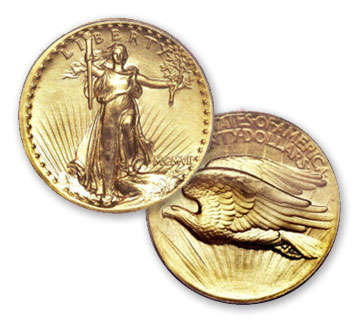
On this gold coin price guide, you can browse gold coins for sale, find actual prices of gold coins sold at auction, and get a free appraisal of gold coins online.
Why Buy Collectible Gold Coins?
Rare gold coins are not only beautiful collector's items, but also an attractive investment. Rare gold coins have wide appeal as collectors' items and can increase in value exponentially over time. This US gold coin price guide gives both buyers and sellers a deeper understanding of the factors that affect the value of gold coins.
Where is the Best Place to Buy Gold Coins Online?
Coin collectors know that Heritage Auctions is the world's largest coin auctioneer, with an incredible inventory of gold coins for sale at auction. Browse our upcoming auctions for gold coins and compare prices between grades for the same coin.
How to Sell Your Gold Coins for the Most Money
When it comes time to sell your gold coins, nobody has the reputation and marketing reach of Heritage Auctions to attract collectors worldwide. Upload photos of your gold coins to get a free appraisal.
Where to Get a Free Appraisal for Gold Coins?
When should you get a gold coin appraised?
- Before selling: If you are planning to sell your gold coin, it is important to know its current market value. An appraisal can help you determine a fair selling price, and can also provide valuable information about the coin's condition, rarity, and historical significance.
- Before insuring: If you have a valuable gold coin collection, it is a good idea to have it appraised and insured. An appraisal can provide an accurate estimate of the collection's value, which can help you ensure that you have adequate insurance coverage.
- Before purchasing: If you are considering purchasing a gold coin, it is important to know its true value to avoid overpaying or purchasing a counterfeit coin. An appraisal can help you make an informed decision about whether or not to purchase the coin.
- Yes, it is generally recommended to work with a certified gold coin appraiser. A certified appraiser has gone through specialized training and testing to ensure that they have the knowledge and expertise to accurately evaluate the value of gold coins. Certification for appraisers can be obtained through organizations such as the International Society of Appraisers (ISA), the American Society of Appraisers (ASA), and the Appraisers Association of America (AAA).
- You can request an appraisal 24x7 from the comfort of your own home. Simply upload photos of your coins and our experts will contact you.
- Heritage Auctions is a reputable and well-established auction house that has been in business since 1976. They have a team of experienced and knowledgeable experts who specialize in appraising and selling rare and valuable coins, including gold coins.
- In addition to our expertise in appraising coins, Heritage Auctions has a reputation for honesty and transparency in business practices. We are committed to providing accurate appraisals and fair prices for their customers, whether they are selling or buying coins.
Lookup US Gold Coin Values from Past Auctions
How do you find the price of a gold coin? Whether buying or selling gold coins, the best resource is Heritage Auctions past sales. Why? Because Heritage Auctions is the world's largest coin auction house, and chances are you can find the same or a similar gold coin price in our archives. We have US gold coin prices and gold world coin values, too.
Back to top »
| Gold Dollar Prices Gold Dollars for Sale Past Auction Prices Free Appraisal |  |  | | |
| Gold Quarter Eagles Prices Gold Quarter Eagles for Sale Past Auction Prices Free Appraisal | | | | |
| Three and Four Dollar Gold Coins Gold Dollars for Sale Past Auction Prices Free Appraisal | | | | |
| Gold Half Eagle Coins Half Eagle Coins for Sale Past Auction Prices Free Appraisal | | | | |
| Gold Eagle Coins Gold Eagle Coins for Sale Past Auction Prices Free Appraisal | | | | |
| Double Eagle Gold Coins Double Eagle Gold Coins for Sale Past Auction Prices Free Appraisal | | | | |
| Commemorative Gold (pre-1933) Coins Commemorative Gold Coins for Sale Past Auction Prices Free Appraisal | | | | |
| Commemorative Gold (1984 and later) Coins Commemorative Gold Coins for Sale Past Auction Prices Free Appraisal | | | | |
| US Bullion Coins US Bullion Coins for Sale Past Auction Prices Free Appraisal | | | | |
| Ancient Gold Coins Shop Ancient Gold Coins for Sale Past Auction Prices Free Appraisal | | | | |
| Gold World Coins World Gold Coins for Sale Past Auction Prices Free Appraisal | | |  |  |
Gold Coin Terminology
When it comes to investing in gold coins, it is important to understand some of the commonly used terms associated with precious metals.View the definitions of common gold coin collecting terms on the Gold Coin Glossary of Terms page.
Coins versus Bars or Rounds
The following table lists advantages and disadvantages of purchasing the various types of physical forms of gold.| Description | Advantage | Disadvantage | |
| Coins | Thin, circular discs that have legal tender status and are produced by government mints | Considered collectible Potential for tremendous growth value | Uncirculated coins go for a slightly higher premium above spot than bars and rounds |
| Bars | Thin, rectangle-shaped and are minted by private companies | Stackable Ease to store and transport Low premium over spot price | Not considered "collectible" |
| Rounds | Thin, circular discs minted by private companies or government and do not have status as legal tender | Stackable Ease to store and transport Low premium over spot price | Generally considered "collectible" |
History of Gold Coins
- Ancient civilizations (circa 2700 BCE -- 600 BCE): Gold was initially used as a form of currency by the ancient Egyptians, who created gold rings and other jewelry items for trade. The Lydians, a civilization in modern-day Turkey, were the first to mint gold coins around 600 BCE, featuring a lion's head design.
- Greek and Roman Empires (circa 600 BCE -- 476 CE): The use of gold coins flourished during the Greek and Roman Empires. The Greeks issued gold coins called staters, which depicted various gods and goddesses. The Romans began minting gold coins called aurei (singular aureus), which featured the emperor's portrait and were used as a symbol of power and prestige.
- Byzantine Empire (330 CE -- 1453 CE): The Byzantine Empire continued the Roman tradition of minting gold coins, introducing the gold solidus. The solidus was a stable and widely accepted currency throughout the empire and its neighboring territories.
- Middle Ages (circa 5th -- 15th centuries): With the decline of the Roman Empire and the rise of feudalism, gold coin usage waned in Europe. However, Islamic Caliphates continued to mint gold coins called dinars, which became the primary currency of trade across the Mediterranean and beyond.
- Renaissance and Age of Exploration (14th -- 17th centuries): The European discovery of the New World and increased trade with Asia brought about a resurgence in the use of gold coins. The Spanish introduced the gold doubloon, while the Portuguese minted the gold cruzado. The British sovereign and the French Louis d'or also gained prominence during this period.
- 18th and 19th centuries: Gold coins remained a popular form of currency in the 18th and 19th centuries, with the gold standard being widely adopted by various countries. Notable examples include the United States' gold eagle and the Russian imperial.
- 20th century: The gold standard was gradually abandoned in the 20th century due to economic instability, particularly during the Great Depression. Gold coins shifted from being a widely used currency to being primarily bullion coins or collectors' items.
- In 1933, President Franklin D. Roosevelt issued Executive Order 6102, which prohibited private ownership of gold bullion, gold coins, and gold certificates within the United States, requiring citizens to exchange their gold for U.S. dollars. This order was enacted to combat the Great Depression and stabilize the U.S. economy by consolidating the nation's gold reserves.
- However, this ban on private gold ownership was lifted on December 31, 1974, when President Gerald Ford signed a bill that re-legalized the possession, sale, and purchase of gold coins, bullion, and certificates by U.S. citizens. Since then, Americans have been allowed to own gold coins both for investment purposes and as collector's items.
Today, gold coins continue to be minted by governments and private mints as investment vehicles and collectors' items. They hold both historical significance and intrinsic value, making them a popular choice for investors and history enthusiasts alike.
Learn More About Coin Collecting
Get collecting news, auction recaps and sneak previews when you subscribe to the Heritage Auctions Coin Collecting newsletter.
View Coin Value GuidesFree Offer
Protect your investment. Download a free copy of The Collector's Handbook - your definitive guide for documenting and safeguarding your collection.
Ready to Sell Your Coins?
Get a Free Auction Evaluation for Rare Coins - Generous Cash Advances Available