
Ancient Coins Grading Tutorial
This grading guide for ancient coins will demystify the process and explain the terminology so you can estimate the value of your own coins, know when to seek an appraisal, and understand how independent grading companies work. Because grading coins can be subjective, Heritage Auctions uses grading companies, and can guide you through the process.
View All Grading TutorialsContents
- How are Ancient Coins Graded?
- Should You Send Your Ancient Coins to a Third-Party Grading Company?
- How Were Ancient Coins Struck, and How Does that Affect the Grade?
- How to Determine if an Ancient Coin is Genuine?
- How Does NGC Grade Ancient Coins?
- What Do NGC Strike and Surface Grades Mean?
- What Are NGC Special Designations?
- What Types of Ancient Coins Does NGC Grade?
- What Types of Ancient Coins are Not Eligible for NGC Grading?
- Does PCGS Grade Ancient Coins?
- What Are Other Possible Coins Attributes?
How Are Ancient Coins Graded?
Coins are graded on the Sheldon Scale based on their circulation, wear, and possible defects or alterations. Since the grade or attribute is based on visual appearance, it can be subjective between what is considered minimal wear or moderate wear, for example. While the vast majority of ancient coins in the market are sold raw with a general grade associated, to eliminate biases Heritage sells primarily NGC-graded ancient coins.
Should You Send Your Ancient Coins to a Third-Party Grading Company?
Heritage’s decision to sell graded ancient coins has made coin collecting more accessible and has helped to drive the market forward. While a majority of the coins that we sell are graded, we will only recommend sending coins to a grading service if we believe that having them graded will increase the coin's overall value.
Heritage Auctions accepts coins that have been graded by NGC (Numismatic Grading Company). However, if your coin is uncertified or already in a holder from another company, we are able to send it to NGC on your behalf.
How Were Ancient Coins Struck, and How Does that Affect the Grade?
When ancient coins were made, they were struck from two dies, an anvil die and a hammer die. Artisans, known as celators, would engrave a reversed image on each die. A small metal disk, called a planchet, was heated, placed between the two dies, and then struck, thereby displacing the metal and leaving an impression from the dies.
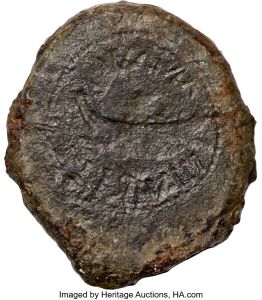
As a result of this process, no two coins are identical even if struck from the same dies. It was more of an art than a science. The amount of detail on the coin was affected by the size of the flan, its thickness, its temperature when struck, where it was placed between the two dies, and how hard it was struck. The orientation of a coin can be different based on the rotation of the hammer die. Also, the dies would only last so long before they wore out and needed to be replaced.
How to Determine if an Ancient Coin is Genuine?
Since the invention of coins, people have been creating imitations or fourrees. Because ancient coins are a popular collectible item, there are countless fake coins or modern forgeries in the market now. Even though Heritage Auctions does sell ancient imitations and fourrees of official issues, we do not sell modern fake coins.
There are many known fake coins, but new examples are and will always be made. Although there is no foolproof way to determine if a coin is genuine or not, there are some criteria that can help with this. Some red flags that the coin is fake are: discrepancies in the weight of a coin, the quality of the metal, and if the coin appears to be cast instead of struck.
With that in mind, there are numerous types of authentic ancient cast coins, such as Roman Republican aes grave and Celtic potin units. Although NGC does not certify cast coins, Heritage Auctions does sell these types of coins uncertified, when we are confident that they are authentic.
To minimize the risk of buying or selling modern fake coins, Heritage Auctions utilizes the expertise and opinions of the grading companies.
How Does NGC Grade Ancient Coins?
All coins are graded on a standardized scale, called the Sheldon Scale, based on their circulation, wear, and possible defects or alterations. The chart below shows the NGC grades, their Sheldon Scale equivalent ranges, and example coins. You can also find this on the NGC website.
| Grade Name | Grade Abbreviation | Sheldon Scale Equivalence | Examples Sold by Heritage Auctions |
|---|---|---|---|
| Gem Mint State | Gem MS | 65-70 | 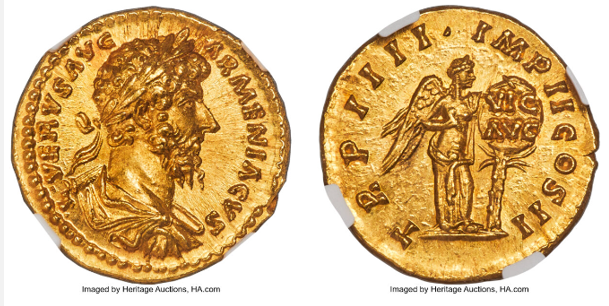 |
| Choice Mint State | Choice MS | 63-64 | 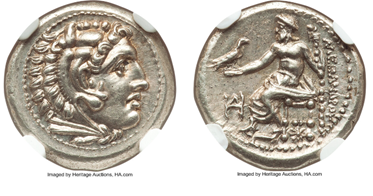 |
| Mint State | MS | 60-62 | 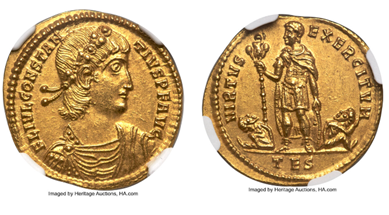 |
| Choice About Uncirculated | Choice AU | 55-58 |  |
| About Uncirculated | AU | 50-53 | 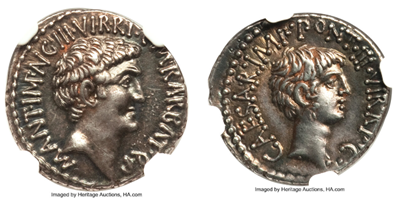 |
| Choice Extremely Fine | Choice XF | 45 | 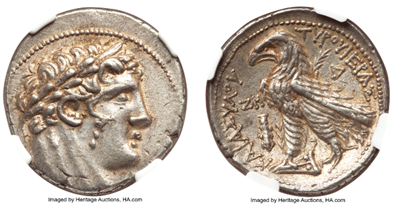 |
| Extremely Fine | XF | 40 | 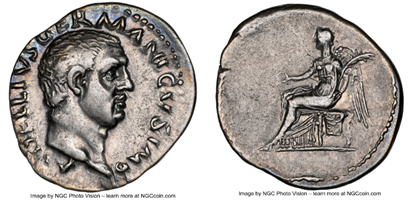 |
| Choice Very Fine | Choice VF | 30-35 | 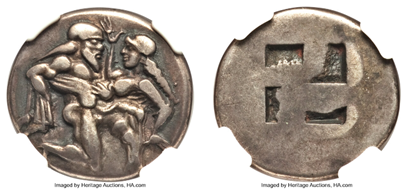 |
| Very Fine | VF | 20-25 | 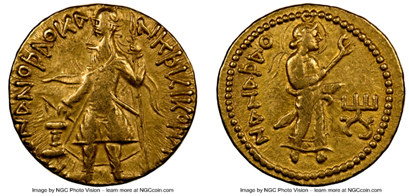 |
| Choice Fine | Choice F | 15 | 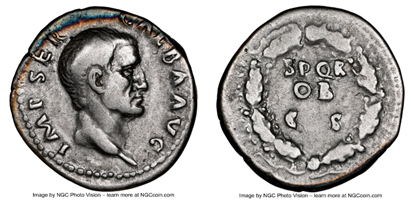 |
| Fine | F | 12 | 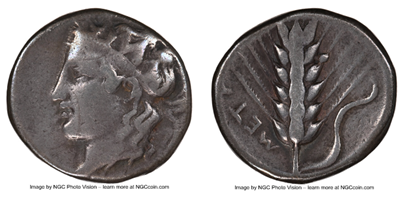 |
| Very Good | VG | 8-10 | 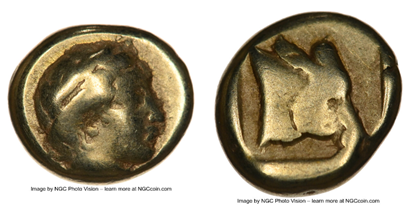 |
| Good | G | 4-6 | 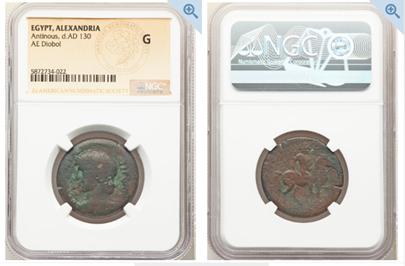 |
| About Good | AG | 3 | 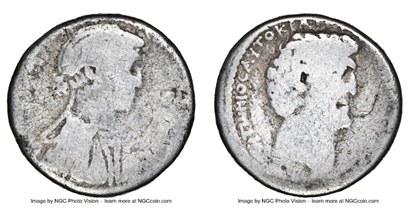 |
| Fair | FR | 2 | No example in the archives. |
| Poor | PO | 1 | No example in the archives. |
What Do NGC Strike and Surface Grades Mean?
NGC offers services for coins to be either net graded (with one of the previously mentioned grades from their grading scale) or an expanded grade with a strike and surface grade of 1-5. The higher the number, the better for the coin. NGC states that
“Each point represents a 20 percent portion of the 5-point scale; thus, those designated by a ‘5’ rating need not be perfect, as that rating incorporates the top 20 percent of the scale.”
The strike grade refers to how well a coin was struck. A coin can be MS but was struck from worn dies, so the features might not be as crisp, but there is no circulation wear on the coin. According to NGC,
“The primary considerations for Strike are centering, strength of strike, evenness of strike, striking cracks, planchet imperfections and die state.”
The surface grade is related to the quality of the surface of a coin. According to NGC, their
“primary considerations for Surface quality are luster, corrosion, porosity, encrustation, silvering, cleaning, marks, hairlines and scratches.”
For more information refer to NGC’s Ancient Coin Grading.
What Are NGC Special Designations?
| ★ (Star) | The star designation refers to the eye appeal of a specific coin, independent of the grade of a coin. NGC will include this with the grade name. | 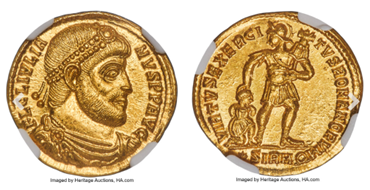 |
| Fine Style | This designation refers to the style and artistry of the die carver. When coins have exceptional style compared to other coins of the same type, NGC will add this modifier after the grade or strike and surface numbers for the coin. | 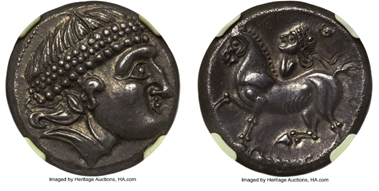 |
| Silvering | This designation refers to whether a billon (BI) coin retains its original silver coloring. These coins were struck from a debased silver alloy. | 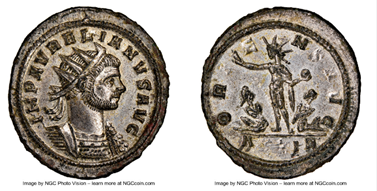 |
| Full Crest | This designation used specifically for Athenian tetradrachms, and refers to whether Athena’s full helmet and crest are present on the flan. | 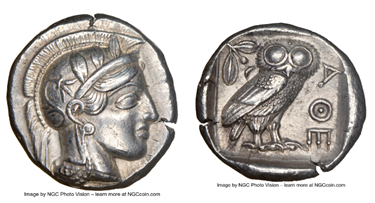 |
| ”Boscoreale” Tone | This modifier refers to a distinct toning on Roman Imperial coins found in hoards in the bay of Naples. The excavation of these sites in 1894 or 1895 unearthed an amazing treasure trove that included silver table vessels and more than 1,000 gold aurei. The intense heat from the volcanic ash, lava and pyroclastic flows from the eruption of Vesuvius left nearly all of the gold coins found in the area with a distinctive reddish discoloration which has come to be known as “Boscoreale toning.” Although it is impossible to tell for certain whether any particular coin was from the Boscoreale Hoard, because no formal records were made of the hoard before it was dispersed to local museums and coin collectors. | 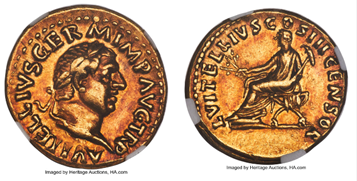 |
What Types of Ancient Coins Does NGC Grade?
Celtic, Greek, Judaean, Oriental, Roman Republic, Roman Imperial, Roman Provincial, and Byzantine coins. Fourrées and ancient imitative coins, can be graded, and that will be noted on the holder.
What Types of Ancient Coins are Not Eligible for NGC Grading?
NGC does not typically grade Ancient Indian gold coins.
Ineligible or not suitable for encapsulation: Not genuine, undetermined, authenticity unverifiable, tooled, repaired, altered surfaces, fragile, and bronze disease.
Does PCGS Grade Ancient Coins?
No, PCGS does not grade Ancient Coins.
Other Possible Coins Attributes
| Descriptors | Definitions | Examples |
|---|---|---|
| Altered Surface | Cleaning or altering the surface of the coin. A coin with altered surfaces is not eligible for encapsulation by NGC. | 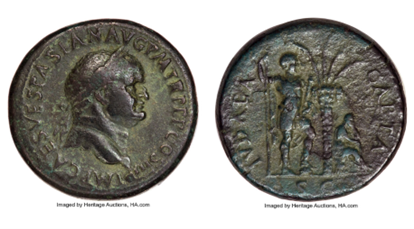 |
| Bent | When there is a bend in the flan of a coin. | 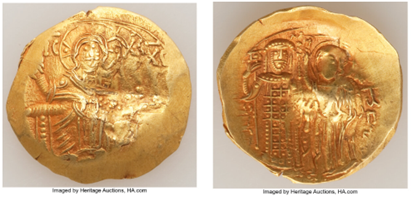 |
| Brockage | It occurred during the minting process when a coin was stuck to one of the dies after being struck. Then, the next planchet was struck with one die image and the inverse image of the previous coin. | 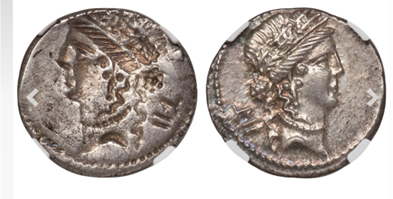 |
| Brushed | Light marks across the surface of the coin caused by cleaning. | 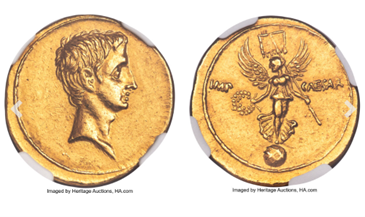 |
| Bankers Marks | Countermarks, stamps, or punch marks, presumably from merchants or bankers, to revalidate a coin and/or check if the coin was a fourree. NGC predominantly uses this term for countermarks on Roman Republican and Roman Imperial coins. | 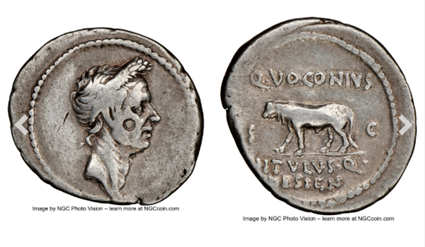 |
| Clipped | The removal of metal from the edge of a coin for the metal content or to adjust the weight of a flan before circulation. | 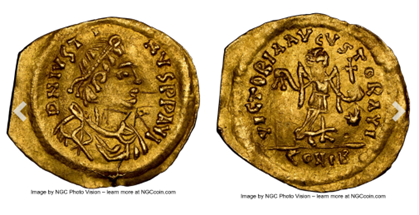 |
| Countermark | Stamps, or punch marks, presumably from merchants or issuing authorities for various reasons, such as: to revalidate and/or check if the coin was a fourree, to revalue or devalue a coin’s worth, or as a form of propaganda. | 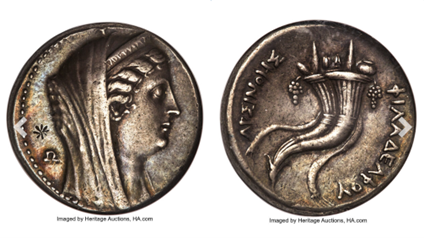 |
| Crystalized | This occurs predominantly in silver coins; the coins surrounding environment affected the alloy matrix of a coin’s metal, leaching the copper from the flan and leaving a pure silver core that is now porous and brittle. | 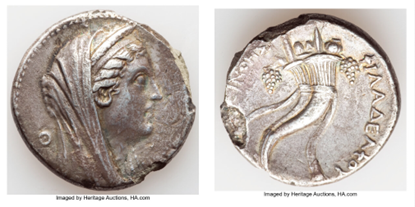 |
| Damaged | Generic term for any kind of damage that is not covered by other terms. | 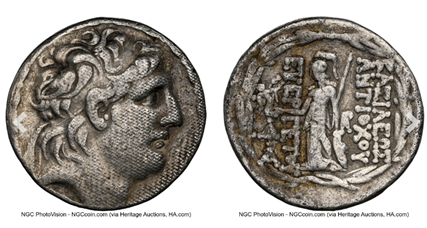 |
| Deposits | Any type of accretion on the surface of a coin is typically caused by the environment in which it was found. | 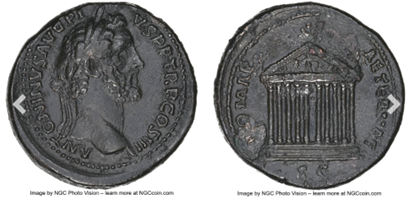 |
| Die Shift | When a coin was struck more than once, and the dies hit the flan in a slightly different way the second time, it produces a visible double image. | 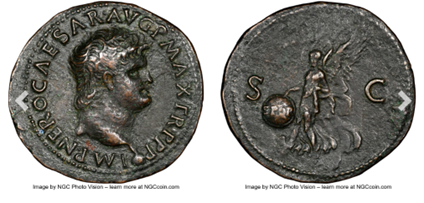 |
| Double-Struck or Flip Over Double-Strike | When a coin is struck more than once with the die hitting the flan in a dramatically different way the second time, it produces a visible and unique double image. | 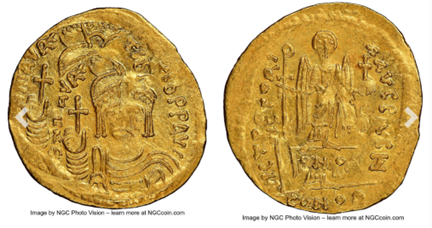 |
| Edge Chip | The edge of a coin has chipped off. This can be the result of the crystallization of the coin’s interior. | 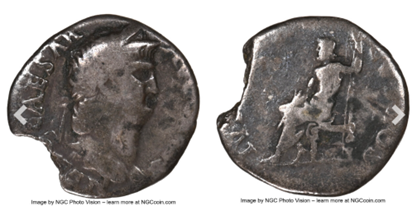 |
| Edge Cut | A test cut to the edge of a coin, presumably from merchants or bankers, to revalidate a coin and/or check if the coin was a fourree. | 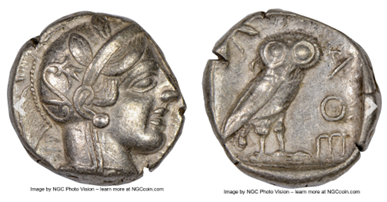 |
| Edge Filing | The filing of the edge of a coin to give the coin a rounder or smoother edge, or to steal precious metal from the coin without going so far as clipping. | 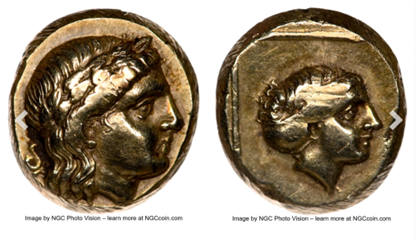 |
| Edge Marks | Defects to the edge of a coin post-production. | 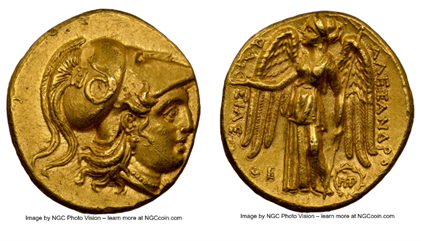 |
| Environmental Damage and Erosion | Damage to the coin that was caused by the coin’s environment, most often by seawater or acidic soil. | 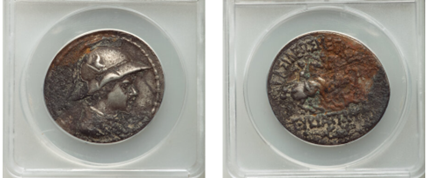 |
| Ex-Jewelry, Ex-Mount, Mount Removed | A coin with signs that it was removed from ancient or modern jewelry. | 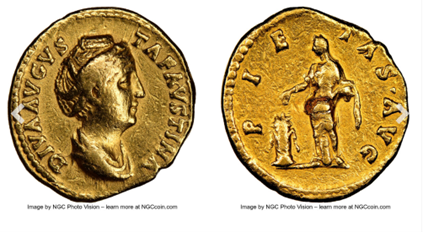 |
| Flan adjustment | When a coin was struck overweight, a quality control person would scrape metal from the surface to bring the coin down to the correct standard weight range. | 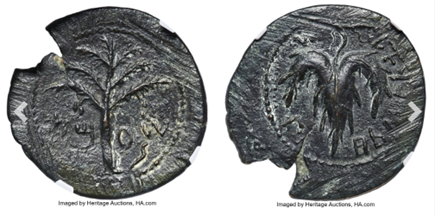 |
| Flan Crack | A crack through the flan of a coin, either through the minting process or post-production. | 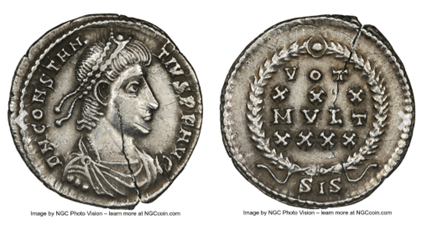 |
| Flan Flaw | An improperly prepared flan where the alloy didn’t mix, resulted in visible flaws in the coin’s metal. |  |
| Flan Void | An improperly prepared flan where the alloy didn’t mix, or a bubble occurred, leaving a gap. | 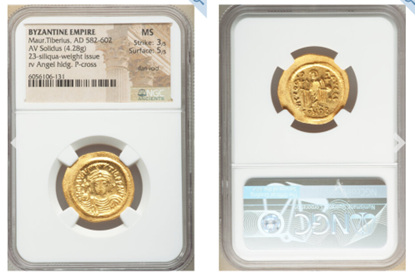 |
| Fragile | A coin deemed too fragile to be housed in a holder. A fragile coin is not eligible for encapsulation by NGC but can be eligible for photo certification. | 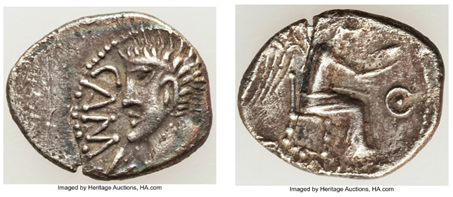 |
| Gouge | A large and deep scrape of the metal across the surface of the coin that left visible grooves and perhaps removed some of the metal from the coin. | 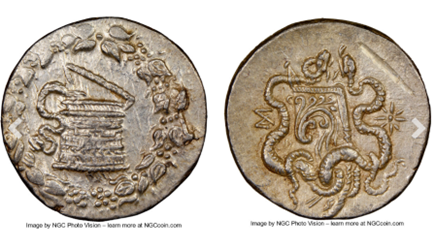 |
| Graffiti | Intentional marks are written on the surface of the coin. | 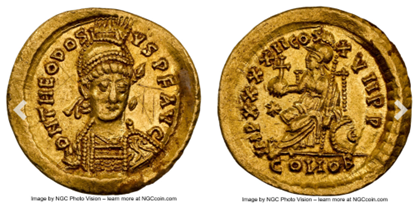 |
| Lamination | When the surface of a coin is peeling away from the interior of the coin. | 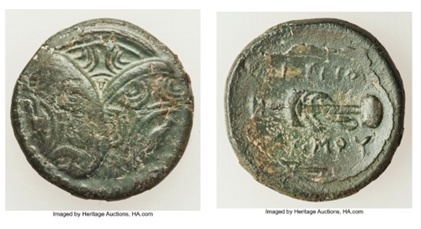 |
| Marks | Defects to the surface of the coin post-production. | 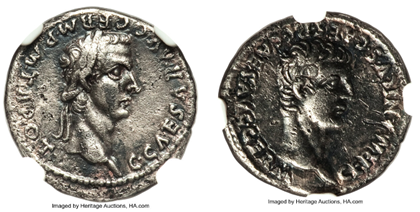 |
| Overstruck | A coin that was minted by one issuing authority that was struck again by a different authority, with parts of the under type partially visible, oftentimes as a form of protest and propaganda. | 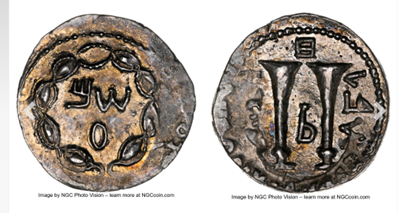 |
| Pierced | An intentional hole drilled or carved through the coin for the purposes of wearing it as or mounting it to jewelry. | 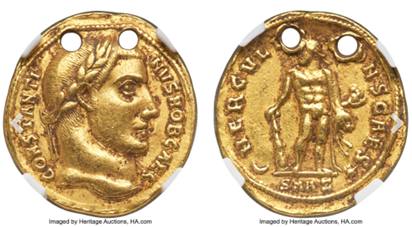 |
| Porosity | When the coin has a pitted appearance, which can be the result of the surrounding environment having affected the surface metal. | 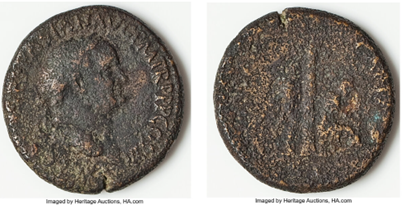 |
| Polished | Coins that have been mechanically scrubbed to produce shiny surfaces. | 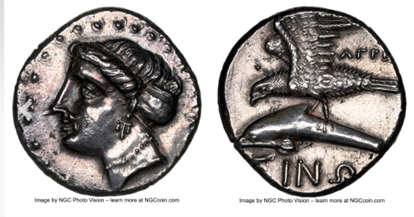 |
| Repair | The act of manipulating or adding metal to the flan to fix imperfections on the coin. | 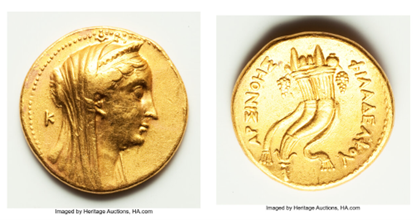 |
| Repatinated | An artificial surface covering, typically on base-metal coins. A common example is “sandy patina” adhered to dark bronze coins to create green and orange contrasts. Although not natural, this often results in a subjectively far more attractive coin. Although it can usually be safely removed, the underlying coin may have issues. | 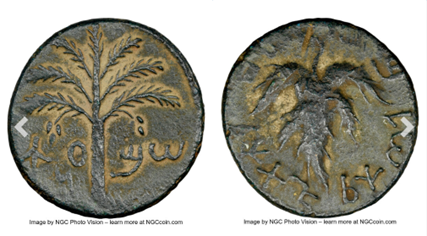 |
| Scratch | An unintentional mark across the surface of a coin. | 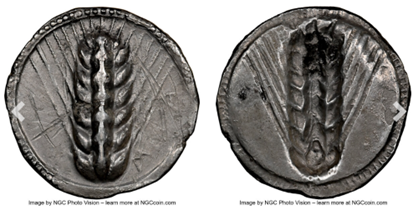 |
| Scuff | A large scrape of the metal across the surface of the coin that left visible grooves and perhaps removed some of the metal from the coin. | 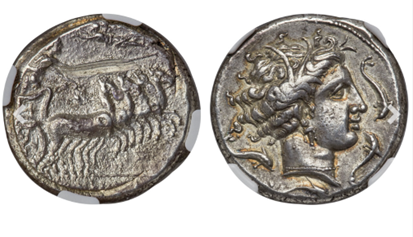 |
| Smoothing | The manipulation of metal in the fields of a coin to give it an artificially smooth appearance, however, the details have not been recarved. | 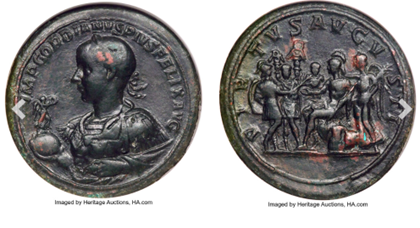 |
| Straightened | When there was a bend in the flan of a coin that was then flattened again. | 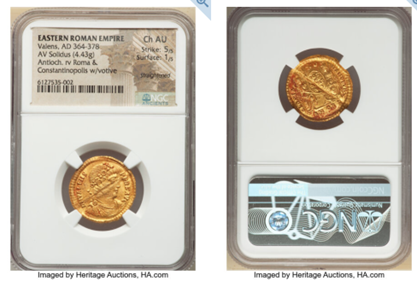 |
| Test Cut | A deep cut into the metal of a coin, presumably from merchants or bankers, to revalidate a coin and/or check if the coin was a fourree. | 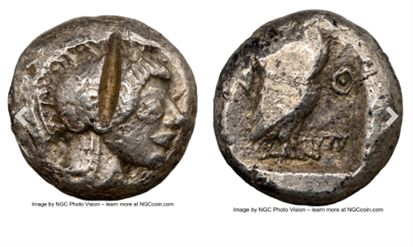 |
| Tooling | The manipulation of metal through recarving of the details and smoothing of the fields of a coin. A coin that has been tooled is not eligible for encapsulation by NGC. | 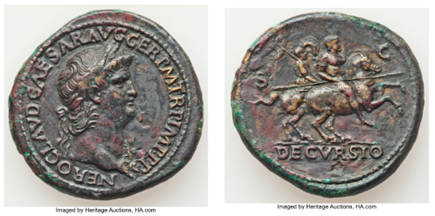 |
| Wavy Flan | A coin that has been bent in many ways and directions. | 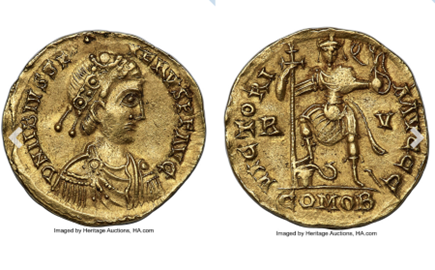 |
| Wrinkled | A coin that has been much more drastically bent in many ways and directions. | 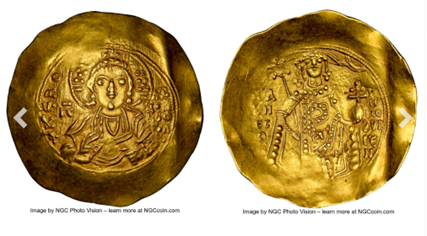 |
Heritage Auctions, the world's largest collectibles auctioneer, offers decades of numismatic expertise. Our seasoned professionals provide clear, authoritative grading tutorials to help collectors of all levels accurately assess and appreciate their coins and as the best place to sell coins, we guide sellers to record-breaking results.